Ngorongoro Crater on the Map: Navigating Tanzania's Natural Wonder
Where is This Crater?
The Ngorongoro Crater is a remarkable geological feature and wildlife sanctuary, recognized as one of Tanzania's most prominent safari destinations. Located in the Crater Highlands of northern Tanzania, this UNESCO World Heritage Site is celebrated as one of Africa’s Seven Natural Wonders, attracting thousands of visitors annually. Covering an area of approximately 260 square kilometers, it is the world’s largest intact and unfilled volcanic caldera, formed around 2.5 million years ago by the collapse of a massive volcano.
Situated within the Ngorongoro Conservation Area (NCA) and conveniently close to Arusha and other famous safari locations such as Serengeti National Park, Lake Manyara, and Tarangire National Parks, the crater is an essential waypoint for safari enthusiasts. The unique volcanic landscape and high concentration of wildlife make Ngorongoro Crater an outstanding destination in Tanzania. Its prominent location on the map of Africa serves as an ideal starting point for visitors planning a Tanzanian safari adventure.
This guide offers valuable insights into the crater’s location, along with essential maps for navigating both to and around this stunning area. It aims to ensure visitors have a seamless and unforgettable experience while exploring one of Africa's most accessible safari destinations.
Geographical Location: Ngorongoro Crater
The Ngorongoro Crater is a remarkable geological feature situated in northern Tanzania, approximately at 3°12' South latitude and 35°30' East longitude. It is part of the Crater Highlands, an area influenced by volcanic activity along the eastern arm of the East African Rift System. The crater itself is included within the Ngorongoro Conservation Area (NCA), which spans 8,292 square kilometers and hosts a variety of ecosystems.
Measuring between 16 to 19 kilometers in diameter and reaching depths of about 600 meters, the crater forms a natural enclosure that sustains a rich biodiversity. This includes a population exceeding 25,000 animals and the renowned Big Five: lion, leopard, elephant, buffalo, and rhinoceros.
Tanzania, home to the Ngorongoro Crater, is located on the eastern coast of Africa just south of the equator, shares borders with Kenya to the north and Uganda to the northwest, while the Indian Ocean lies to the east. The Ngorongoro Crater is about 30 miles south of the Kenyan border, making it a significant stop on the northern safari circuit. This circuit features other well-known destinations such as Serengeti National Park, Lake Manyara, Tarangire National Park, and Arusha National Park.
Additionally, the ecological importance of Ngorongoro is heightened by its proximity to Lake Victoria and the expansive Serengeti ecosystem, which is famous for supporting the Great Migration. On a map of Africa, the Ngorongoro Crater is positioned in the northeastern area of Tanzania, approximately 180 kilometers (112 miles) west of Arusha, the main safari hub in the region. The unique location and ongoing conservation efforts make Ngorongoro a crucial area for wildlife preservation and an unforgettable destination for nature enthusiasts and travelers.
Ngorongoro Geographical Features
- Coordinates: 3°12'S, 35°30'E
- Region: Crater Highlands, Ngorongoro District, Arusha Region, Tanzania
- Area (Crater): 260 sq. km (100 sq. miles)
- Area (NCA): 8,292 sq. km (3,202 sq. miles)
- Elevation (Crater Floor): 1,800 m (5,900 ft) above sea level
- Crater Depth: 600 m (2,000 ft)
Proximity of Ngorongoro to Major Tanzania Safari Destinations
Ngorongoro Crater is a notable feature within Tanzania's renowned Northern Safari Circuit, serving as a central point for various safari itineraries. Its advantageous location near Arusha facilitates convenient day trips and quick escapes. The crater's accessibility to neighboring parks such as Tarangire, Lake Manyara, and the Serengeti further enhances its role in multi-day safari experiences. This geographical benefit allows travelers to tailor their adventures, whether they're looking for a single day of wildlife viewing or a comprehensive week-long journey that showcases diverse ecosystems and rich cultural landscapes. The ease of travel among these destinations makes it simple to incorporate Ngorongoro into virtually any northern circuit safari package. At Serengeti Wonder, we prioritize customization, enabling customers to combine visits to Ngorongoro with other destinations or activities of interest, including game drive safaris in Lake Manyara or cultural walking tours in Mto wa Mbu.
Proximity to Arusha
Arusha, recognized as Tanzania’s safari capital, is the main gateway to the Ngorongoro Crater and other northern circuit destinations. It is situated approximately 180 kilometers (112 miles) east of the Ngorongoro Conservation Area (NCA). Travelers can expect a drive of about 3 to 4 hours from Arusha to the crater’s main entry point, Loduare Gate, with travel times influenced by road conditions and traffic. The route typically follows the A104 road heading west towards Dodoma, branching onto the B144 road towards Karatu, a quaint town known for its cultural sites and local markets. Clear signage from Karatu assists drivers en route to Loduare Gate.
This scenic journey offers lush highland views that include Mount Meru and, on clear days, Mount Kilimanjaro. Many travelers find it worthwhile to stop in Mto wa Mbu, a lively town near Lake Manyara, to explore local crafts or savor regional meals. While the road is generally well-paved, sections may become rough, especially during the rainy season from November to May, making a 4x4 vehicle advisable for comfort and reliability.
Proximity to the Serengeti
The Ngorongoro Conservation Area shares its western boundary with Serengeti National Park, forming a contiguous ecosystem that supports the renowned Great Migration of wildebeest, zebras, and gazelles. It is roughly 60 kilometers from the crater rim to the Serengeti’s Naabi Hill Gate, facilitating the combination of both destinations within a single safari itinerary. The drive between the crater and the Serengeti is about 1.5 to 2 hours, transitioning from the enclosed caldera of Ngorongoro to the expansive plains of the Serengeti.
The absence of fences between the NCA and the Serengeti allows for the unhindered movement of wildlife, which enhances the overall safari experience. Many tour packages are designed in multi-day itineraries that encompass both areas, granting visitors the opportunity to experience the rich wildlife of the crater alongside the vast landscapes and migration events of the Serengeti. This connection is especially significant during the migration season from December to July, when animals traverse the southern Serengeti plains adjacent to the NCA.
Proximity to Tarangire
Located southeast of the Ngorongoro Conservation Area, Tarangire National Park is celebrated for its ancient baobab trees and large herds of elephants. The distance between Tarangire and the Ngorongoro Crater is approximately 150 kilometers (93 miles), with an estimated travel time of around 3.5 to 4 hours by road.
Travelers typically pass through Makuyuni, continuing towards Lake Manyara and Karatu en route to Ngorongoro. This route allows for the creation of a comprehensive safari itinerary that sequentially includes Tarangire, Lake Manyara, Ngorongoro, and the Serengeti. Each park presents a distinct landscape and wildlife experience, making the journey between them just as enriching as the destinations themselves.
Proximity to Lake Manyara
Lake Manyara National Park ranks among the closest parks to Ngorongoro Crater, making it an excellent choice for a combined visit on a 2–3 day safari. Nestled at the base of the Rift Valley escarpment, Lake Manyara is located about 60 kilometers (37 miles) from the crater rim.
The drive from Lake Manyara to Ngorongoro takes approximately 1 to 1.5 hours. Travelers will pass through the town of Karatu, a vibrant agricultural hub featuring coffee farms, curio shops, and various accommodations. Lake Manyara is renowned for its tree-climbing lions, flocks of flamingos, and lush groundwater forest, providing a delightful contrast to the more open grasslands prominent within Ngorongoro.
Getting to the Ngorongoro Crater
There are various ways for customers to access the Ngorongoro Crater. While the descent and ascent within the crater itself are generally undertaken by road, visitors can reach the Ngorongoro Conservation Area by both air and road transport. This provides flexibility in planning their travel to this stunning destination.
By Air
Most international visitors arrive at Kilimanjaro International Airport (JRO), located approximately 50 kilometers from Arusha. From the airport, travelers can either arrange a road transfer to the Ngorongoro Conservation Area (NCA) or opt for a domestic flight to Lake Manyara Airstrip. This flight is followed by a 1.5-hour drive to the Loduare Gate. For those seeking a more direct route, charter flights are available to smaller airstrips within the NCA, such as those near Ndutu, although this option tends to be quicker and more costly, generally the perfect choice for premium customers with limited travel time.
By Road
The most common method of reaching the Ngorongoro Crater is by road from Arusha to Loduare Gate, a distance of around 180 kilometers. This journey is often organized by tour operators like us, Serengeti Wonders, who provide 4x4 vehicles and experienced driver-guides. The route crosses through Karatu, allowing travelers to refuel or visit local attractions before entering the conservation area.
Travel Option and its Approximate Travel Time
- Flight to Kilimanjaro (JRO): International gateway, followed by road transfer; 1-hour flight + 3-4 hours drive
- Flight to Lake Manyara Airstrip: Domestic flight from Arusha, then drive to NCA; 30-minute flight, 1.5-hour drive
- Road from Arusha: Road number A104 to B144, via Karatu to Loduare Gate; 3-4 hours drive
Navigation Tips for Ngorongoro
Planning your visit to the Ngorongoro Conservation Area is essential due to its remote location and regulated access. With our expertise as a local experienced tour operator, Serengeti Wonders plans for your Ngorongoro Safari in the best way possible and Here are some important navigation tips:
Route from Arusha
To reach the conservation area, start from Arusha and take the road heading west. When you arrive at Mto wa Mbu, turn right and continue through Karatu until you reach Loduare Gate. Because signage may be limited in rural areas, utilizing a GPS device or a detailed map is advisable. Many tour operators like Serengeti Wonders can assist with logistics, providing a seamless travel experience.
Entry Gates
The main entrance to the Ngorongoro Conservation Area is Loduare Gate, located on the eastern side. Alternatively, visitors coming from the Serengeti may use the less-frequented Lemala Gate. It’s important to stop at the gate to pay the conservation fees and to obtain the necessary permits for the crater access fee, which are charged per car. Our Ngorongoro tour packages include all these fees, whereby our customers will only have one Task: to explore and experience.
Crater Access
Access to the crater is restricted to authorized 4x4 vehicles. Visitors must use the Seneto descent road to enter and the Lerai ascent road to exit, following a one-way traffic system to lessen congestion and protect the environment. Game drives are limited to a six-hour duration, occurring either from 6 AM to 12 PM or from 12 PM to 6 PM, to minimize ecological impact.
Within the Crater
The crater is equipped with designated routes that guide visitors through various habitats, including open grasslands, Lerai Forest, Lake Magadi, Gorigor Swamp, and Ngoitokitok Springs. Park rangers enforce strict regulations, such as staying on marked paths and keeping a safe distance from wildlife.
Maps for Navigation
Utilizing maps is crucial for a thorough understanding of the Ngorongoro Crater and for effectively planning your visit:
Africa Map: Tanzania, located in East Africa, is bordered by Kenya to the north and the Democratic Republic of the Congo to the west. The Ngorongoro Crater is situated in northern Tanzania, near the Kenyan border.
Tanzania Map: A national map indicates the crater’s geographic location within the Arusha Region, which is approximately 180 km west of Arusha and adjacent to the Serengeti.
Ngorongoro Conservation Area Map: This map provides an overview of the NCA’s boundaries, entry gates (Loduare and Naabi Hill), major roads, and notable attractions such as Olduvai Gorge and Empakaai Crater.
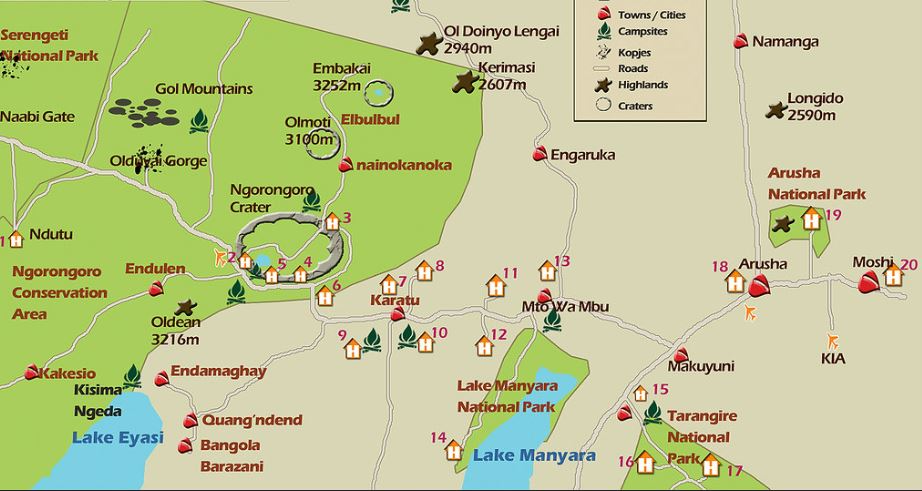
Key Attractions Within the Ngorongoro Crater
Here are the key attractions within the crater listed in sentence form:
The open grasslands: This features a vast plain ideal for grazing, where visitors can encounter wildlife such as wildebeest, zebras, gazelles, and lions.
The Lerai Forest: A unique yellow fever tree forest that is home to elephants, leopards, and monkeys.
Lake Magadi: A shallow soda lake known for its vibrant population of flamingos and pelicans.
Gorigor Swamp: A wetland area with permanent water that hosts hippos and waterbucks.
Ngoitokitok Springs: This offers a scenic spot for picnics and attracts hippos and various waterbirds.
Visitors can explore these attractions via designated routes, with maps available from Serengeti Wonders, your tour operators, or at Loduare Gate.
The crater’s compact size allows visitors to explore diverse habitats in a single day
Accommodation Options in Ngorongoro
When planning a visit to the Ngorongoro Crater, choosing nearby accommodations can greatly enhance the safari experience, especially during the early morning hours, ideal for game drives. Staying close to the crater reduces travel time from outside the area and maximizes the opportunity to explore its natural wonders. A variety of lodges situated on the crater's rim offer stunning views and convenient access. Serengeti Wonders partners with these lodges to provide visitors with diverse accommodation options while exploring the Ngorongoro Crater.
- Ngorongoro Serena Safari Lodge: Nestled on the western rim, this lodge features panoramic views and modern amenities for a comfortable stay.
- Ngorongoro Sopa Lodge: Located on the eastern rim, this lodge is near the Seneto descent road, making access to the crater easy and convenient.
- Ngorongoro Crater Lodge: This luxury accommodation is known for its unique architecture and exceptional service, catering to those seeking an upscale safari experience.
- Campsites: For budget-conscious travelers, options like the Simba Campsite provide a more rustic experience, allowing guests to immerse themselves in nature.
These diverse options ensure that visitors can find the perfect accommodation to suit their needs while exploring the breathtaking landscapes of Ngorongoro.
Permits and Fees for Ngorongoro Conservation Area
Accessing the Ngorongoro Conservation Area (NCA) and its famous crater involves specific conservation fees and permits. These can be purchased at Loduare Gate or arranged through Serengeti Wonders, your tour operator for Ngorongoro, as part of our Ngorongoro safari package. The fees are divided into three main categories:
Conservation Fee (Entrance/Transit Fee)
This standard fee is required for all visitors entering the NCA. It allows access to the entire conservation area, including regions outside the crater, and is charged per person per 24-hour period. Additionally, this fee is also known as the transit fee for travelers moving between Arusha and the Serengeti, as it supports wildlife protection, conservation initiatives, and community development in the area.
Crater Service Fee (Crater Fee)
This fee is specific to visitors who descend into the Ngorongoro Crater. Charged per vehicle for each day's entry into the crater, it covers costs related to managing and maintaining the unique ecosystem at the crater floor, which experiences significant visitor and vehicle traffic. This fee is separate from the conservation fee and is applicable only for those entering the crater.
Concession Fee
The concession fee is charged to visitors who stay overnight at lodges, tented camps, or any other accommodations located within the Ngorongoro Conservation Area. This fee is applied per person, per night, and helps fund the licensing and regulation of tourism facilities wit**Permits and Fees for Ngorongoro Conservation Area.
The revenue generated from these fees is instrumental in supporting ongoing conservation efforts and community projects alongside the Maasai people in the protected area.
Best Time to Visit Ngorongoro
The Ngorongoro Crater is accessible throughout the year, but the dry season from June to October is considered the best time for wildlife viewing, as animals tend to gather around available water sources during this period. Conversely, the wet season, which runs from November to May, presents an opportunity to experience lush landscapes and fewer tourists, although some roads may become difficult to navigate. It's advisable to check weather updates and consult with your tour operator for the best planning. With our Daily weather updates, we provide our customer with the best timing for their Ngorongoro Safari tour.
Combining Ngorongoro with Other Destinations
The location of the Ngorongoro Crater allows for easy integration with other parks in the northern circuit:
Serengeti National Park: Located 60 km to the west and accessible via Naabi Hill Gate, this park is renowned for its spectacular Great Migration.
Lake Manyara National Park: Situated 50 km to the east, this park is famous for its unique tree-climbing lions and vibrant flamingo populations.
Tarangire National Park: About 139 km southeast, this park is particularly noted for its large elephant herds and iconic baobab trees.
For an enjoyable safari experience, a well-planned itinerary could include 1-2 days exploring the Ngorongoro Crater, followed by 2-3 days in the Serengeti. This combination allows visitors to fully appreciate the diverse wildlife and stunning landscapes these locations have to offer. To find the right fit for your adventure, you can explore a variety of available Ngorongoro tour packages or customize your own tour to reflect your personal preferences.
Plan Your Ngorongoro Safari Today
Navigating to and within the Ngorongoro Crater is straightforward with proper planning. Its location in northern Tanzania, 180 km west of Arusha and adjacent to the Serengeti, makes it an accessible yet awe-inspiring destination. Detailed maps, available through official sources and tour operators, highlight entry points, roads, and wildlife hotspots, ensuring visitors maximize their experience. Whether driving from Arusha, flying to a nearby airstrip, or exploring the crater’s diverse habitats, the Ngorongoro Crater promises an unforgettable adventure. Contact Serengeti Wonders to plan your Ngorongoro Safari tour and discover the magic of this natural wonder.
Ready to explore Ngorongoro Crater? Serengeti Wonders offers customized safari packages for your ideal Tanzania adventure. Book now to experience the Big Five, Maasai culture, and stunning landscapes!
Plan Your Adventure
Fill out the form below to book your Ngorongoro safari. Our team will contact you to confirm your booking and finalize details.